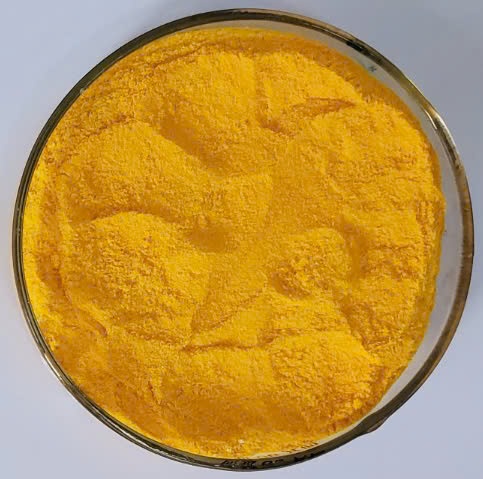
PAC-HB powder for wastewater treatment
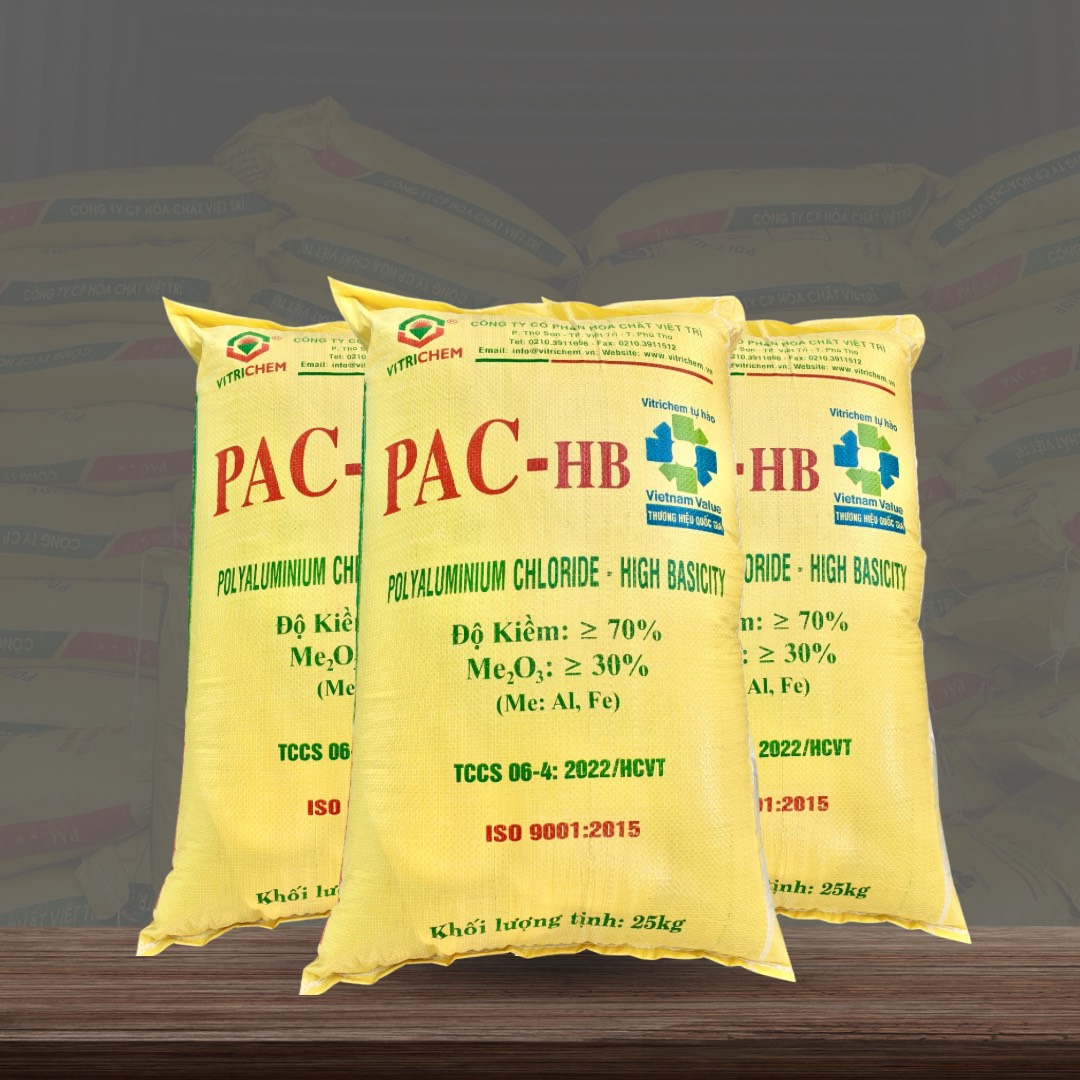

| STT | Indicator name | Unit | Technical requirements | Test method |
| 1 | External inspection | – | Fine powder, yellow brown color | Visual observation |
| 2 | Alkalinity | % | ≥70 | JIS K 1475:2006IS 15573:2005 |
| 3 | Coagulant content Me,O3 (total content of Al 2 O 3 and Fe 2 O 3 ) | % | ≥30 | JISK 1475:2006 IS 15573:2005 |
| 4 | Water insoluble residue content | % | ≤1,0 | JISK 1475:2006TCVN 4560:1988 |
| 5 | AS content | ppm | ≤2 | JISK 1475:2006 IS 15573:2005ICP |
| 6 | Hg content | ppm | ≤0,1 | JISK 1475:2006 IS 15573:2005ICP |
| 7 | Pb content | ppm | ≤2 | JISK 1475:2006 IS 15573:2005ICP |
| 8 | PH (1% solution in water) | – | 3,5÷5 | JISK 1475:2006 |
| 9 | Density | g/cm 3 | ≥ 0,60 | ISO 17828:2015 |
Application
– Suitable for treating domestic wastewater and wastewater in industries.
– PAC-HB is a product with improved technology to increase the alkalinity of the product (PAC-HB alkalinity ≥ 70%, while conventional PAC products only achieve alkalinity ≤45%), therefore PAC-HB has outstanding coagulation efficiency, well suited for difficult-to-treat wastewater sources.
– PAC-HB product has a coagulant content of Me 2 O 3 ≥ 30% (Me 2 O 3 is the total content of Al 2 O 3 and Fe 2 O 3 ) compared to conventional PAC which only has an Al 2 O 3 content of ≥ 28%, therefore PAC-HB gives better water treatment efficiency with lower usage than conventional PAC.
Chemical safety
– Skin: PAC causes skin irritation.
Treatment: Immediately remove clothing and protective gear if exposed to the solution. Then bathe with plenty of water for about 15-20 minutes.
– Eyes: PAC causes swelling and redness of the eyes.
Treatment: Immediately rinse eyes thoroughly with water for 20 minutes, then seek medical attention.
– Respiratory: Inhaling PAC dust can easily cause lung irritation, shortness of breath, and sore throat.
Treatment: Move the victim to an area with fresh air. Give artificial respiration if the victim stops breathing.
– Digestion: Symptoms of poisoning such as: stomach pain, vomiting, diarrhea.
Treatment: Give plenty of water. If the victim is unconscious, do not give them anything to drink. Immediately take them to the nearest medical center.
Storage and transportation
Inventory:
- Packed in jars, sealed packaging.
- Avoid contact with alkaline substances.
- Suitable materials: tanks, containers made of composite, PVC, PE, PP, PA plastic
- Unsuitable materials used: metal containers (iron, aluminum, copper, etc.)
Preserve:
- Do not mix with flammable substances, alkaline substances, food and drinks.
- Best stored at 5 0 C < t o <35 o C.
Transport:
- Use suitable materials to make containers for transporting PAC solution.