CNC milling
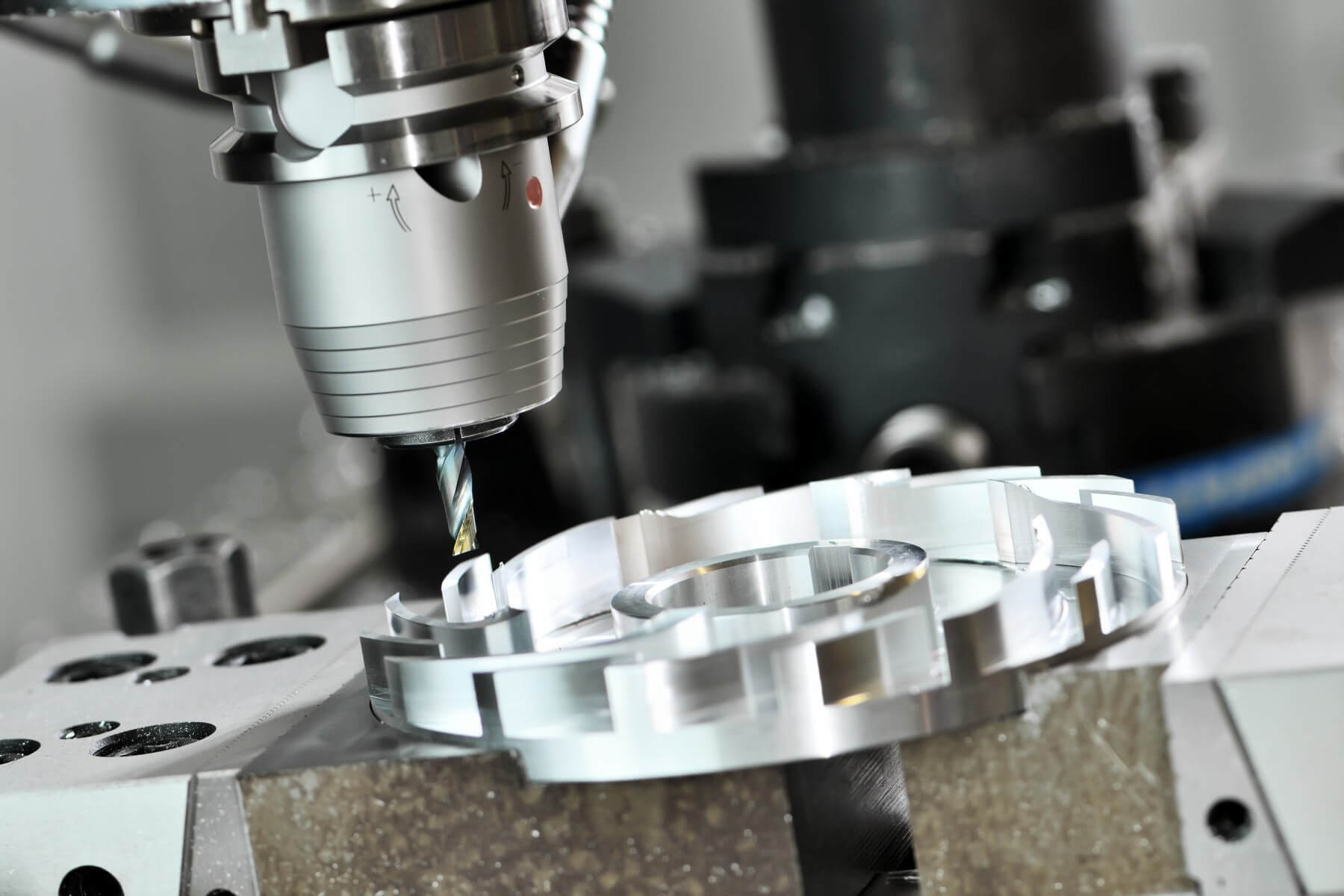
CNC milling is a form of manufacturing that involves removing material from a workpiece to create a finished shape. The CNC milling process begins with you creating a 3D CAD model of your desired part geometry before converting it into a computer program (G-code) using CAM software. This computer program then automates the operations of the cutting tool to create your desired parts.
CNC milling is similar to CNC turning: both processes rely on computer instructions to create parts. However, they differ in how they work. In CNC milling, the workpiece is held stationary while the cutting tool rotates around it. In contrast, CNC turning involves holding the cutting tool in place while the workpiece rotates around it.
Uses of CNC Milling Method
CNC milling is ideal for creating angular shapes, channels, grooves, holes, curves, chamfers, and other complex shapes and features. It also offers short lead times, as parts can be created within minutes, whereas conventional machining processes (such as injection molding) can take days (sometimes weeks) to complete.
CNC milling is also compatible with a wide range of materials, including metals, plastics, and composites. This is one of the main advantages of CNC machines over additive manufacturing processes such as 3D printing, which can only create plastic and some metal parts.
You should also choose CNC milling if you want to create parts with excellent surface finishes, as this subtractive manufacturing process offers a wide range of surface finishing options, including painting, chrome plating, and anodizing.
Some CNC milling materials
* Metal material group:
– Aluminum: 2021, 5052, 6061, 6063, 7075, etc.
– Steel: 303, 304, 316, stainless steel, tool steel, carbon steel, etc.
– Brass
– Copper
– Special alloys: Kovar, Invar, Inconel, Titanium, Mocu, etc.
* Plastic material group
– POM, PTFE, PEI, PA6